Inside Imperial War Museum London: A Fully Permitted FPV Drone Flythrough
A fully permitted FPV drone flight through Imperial War Museum London, filmed by Emmy-winning FPV pilot and drone cinematographer Lewis Whyld for CNN and Imperial War Museums as part of the museum’s Refugees season. The sequence begins outside between the museum’s two monumental Second World War naval guns before flying through the entrance and descending into the main atrium, where Ai Weiwei’s History of Bombs was installed. The filming promoted a season that also included Life in a Camp, the immersive CNN/IWM exhibition created from Lewis Whyld’s 360° footage of the Moria refugee camp in Lesbos.
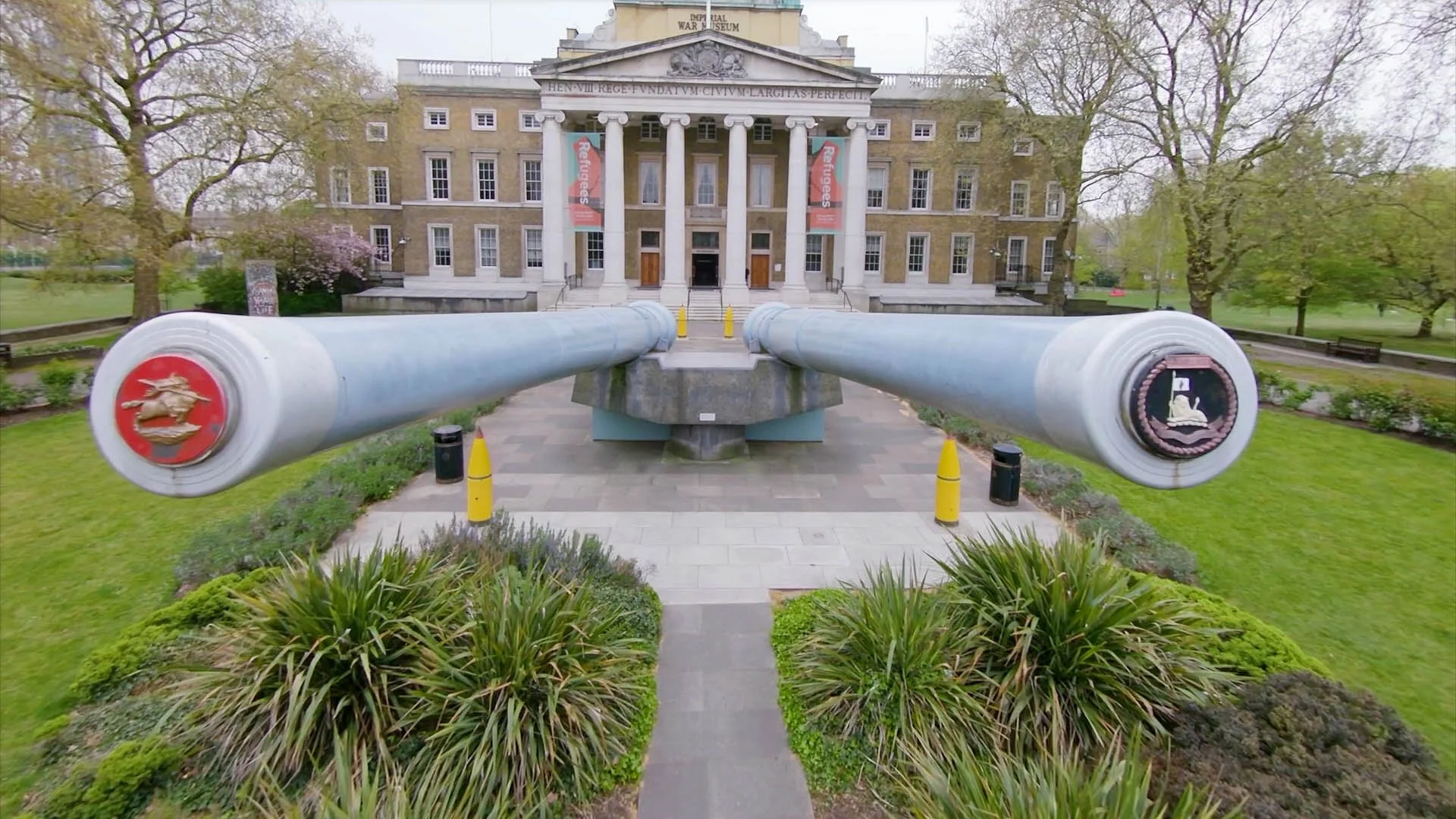
Fully permitted FPV drone cinematography through The Imperial War Museum London for CNN and Imperial War Museums’ Refugees season - flying from the historic naval guns into the main atrium alongside Ai Weiwei’s History of Bombs and Lewis Whyld’s immersive Life in a Camp exhibition.
Project Details
Client / Broadcaster: CNN / Imperial War Museums
Location: Imperial War Museum London, London, UK
Role: FPV Pilot & Drone Cinematographer - Lewis Whyld
Production: Promotional filming for IWM’s Refugees season
Exhibitions:Life in a Camp / Ai Weiwei’s History of Bombs
Filming: Indoor & exterior FPV drone cinematography
Operation: Fully permitted museum flight
Specialism: Heritage / Museum / Architecture / Indoor FPV
Related Work:Life in a Camp immersive installation created from Lewis Whyld’s 360° filming in the Moria refugee camp, Lesbos
Partners: CNN / Imperial War Museums
FPV Cinematography for Imperial War Museums’ Refugees Season
The FPV film was created for CNN and Imperial War Museums as part of IWM London’s Refugees season, using the museum itself as part of the storytelling. The flight began outside between the two monumental naval guns before moving through the entrance and into the main atrium, creating a continuous transition from the museum’s exterior into the exhibitions inside.
The season brought together major work exploring displacement, conflict and the refugee experience, including Ai Weiwei’s History of Bombs and Life in a Camp, the immersive CNN/IWM installation built from Lewis Whyld’s 360° filming inside the Moria refugee camp on Lesbos.
Using FPV allowed the film to connect these spaces in a single cinematic move, revealing the scale of the museum and placing the exhibitions within the wider architectural context of IWM London. The result was not simply an establishing shot of the building, but a moving journey into the season itself.
Planning the FPV Flight Through IWM London
The route was designed as one continuous camera move through Imperial War Museum in central London, beginning outside between the museum’s two huge Second World War naval guns before crossing the entrance and descending into the main atrium.
The exterior-to-interior transition was the key technical challenge. The flight had to remain smooth and cinematic while moving through changing light levels, tighter architectural spaces and a museum environment containing historic exhibits, installations and sensitive public areas.
Delivering a fully permitted FPV flight through a major museum in central London required detailed route planning, permissions, risk assessment and close coordination with the museum and production teams. Pilot position, signal reliability, safe clearances and contingency options were all considered in advance so the sequence could be flown accurately, safely and repeatably.
FPV was particularly well suited to the brief because it could connect the museum’s exterior, entrance and atrium in one uninterrupted move - turning the building itself into part of the story rather than simply using it as a backdrop.
Specialist FPV for Museums, Heritage & Cultural Spaces
The Imperial War Museum project is part of a wider body of FPV and drone work in museums, historic buildings and architecturally significant venues, where access, permissions and precise camera control are as important as the visual ambition of the shot.
I use specialist FPV systems to create continuous camera moves through complex interiors and sensitive spaces, from museums and heritage sites to galleries, estates and landmark buildings. That work includes projects at Notre-Dame Cathedral, Ashridge House, Warwick Castle and other high-profile locations where conventional camera systems cannot achieve the same freedom of movement.
For cultural and heritage venues, the aim is to create immersive cinematography without compromising the building, collections, visitors or operational requirements of the site - combining cinematic movement with careful planning, controlled flying and a safety-first approach.
Related Case Studies
Explore more specialist FPV and drone cinematography across museums, heritage sites and architecturally significant locations:
Notre-Dame Cathedral, Paris — A fully permitted interior FPV flight through one of the world’s most significant historic buildings for CNN’s rare-access reconstruction reporting.
Ashridge House — Cinematic FPV filming through a 700-year-old historic estate, combining heritage interiors, gardens and event spaces.
Warwick Castle — FPV filming through the historic castle and into its winter event, combining heritage architecture with a live visitor environment.
Piazza San Marco, Venice — Close-proximity FPV filming around St Mark’s Basilica, the Campanile and the historic architecture of Venice’s most famous square.
View All FPV & Drone Case Studies →
Planning FPV Filming in a Museum or Heritage Location?
Through Whyldthings, I provide specialist FPV drone cinematography for museums, galleries, heritage buildings, castles, estates and architecturally sensitive interiors.
From initial route design and permissions through to risk assessment, specialist aircraft selection and filming, I work with productions and venues to create ambitious camera movement while maintaining the level of control, repeatability and safety required in high-value cultural environments.