Inside Notre-Dame Cathedral: A Fully Permitted FPV Drone Flythrough
A fully permitted FPV drone flight inside Notre-Dame Cathedral in Paris, filmed by Emmy-winning drone cinematographer Lewis Whyld for CNN during the cathedral’s reconstruction in 2021. The footage formed part of CNN correspondent Melissa Bell’s rare-access reporting from inside Notre-Dame, two years after the devastating 2019 fire. Flying within one of the world’s most significant historic buildings required precise route planning, specialist equipment and an exceptionally controlled approach to safety.
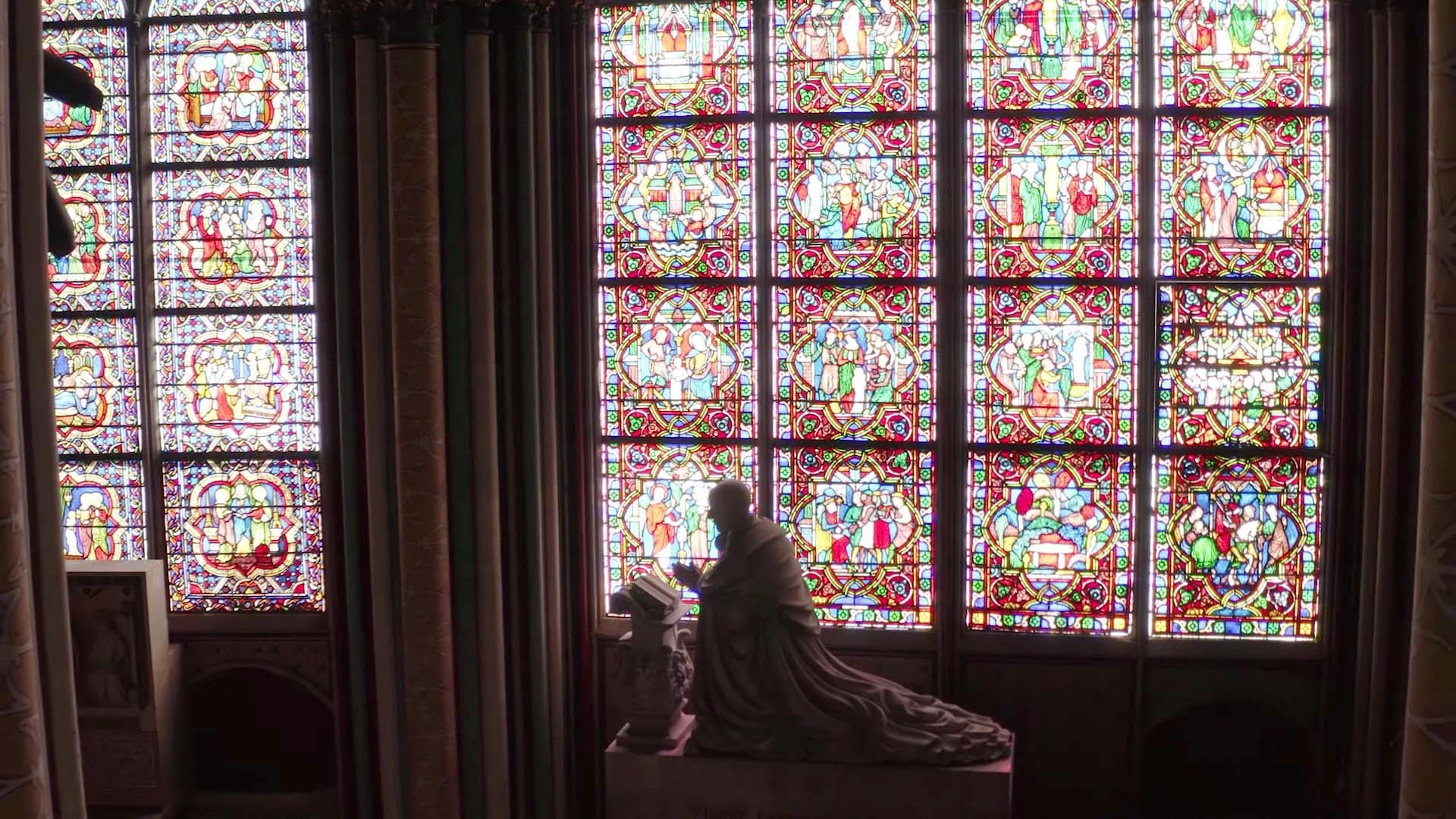
Fully permitted FPV drone cinematography inside Notre-Dame Cathedral, Paris - filmed by Lewis Whyld for CNN during the cathedral’s reconstruction in 2021.
Project Details
Client / Broadcaster: CNN
Location: Notre-Dame Cathedral, Paris, France
Role: FPV Pilot & Drone Cinematographer — Lewis Whyld
Production: CNN coverage of the reconstruction of Notre-Dame Cathedral
Correspondent: Melissa Bell
Filmed: 2021
Broadcast: April 2021
Filming: Indoor FPV drone cinematography
Operation: Fully permitted interior flight
Specialism: Heritage / Architecture / Indoor FPV
FPV Cinematography for CNN's Rare-Access Notre-Dame Report
CNN correspondent Melissa Bell was granted rare access inside Notre-Dame during the cathedral’s stabilisation and reconstruction. My role was to create specialist FPV cinematography that could move continuously through the interior, revealing the scale and architecture of the cathedral from perspectives that conventional ground-based camera systems could not achieve.
The footage was filmed for CNN’s 2021 reporting on the rebuilding of Notre-Dame and broadcast as part of its coverage in April, providing viewers with an immersive perspective from within the historic cathedral while restoration work was still underway.
Flying FPV Inside Notre-Dame Cathedral
Flying an FPV drone inside Notre-Dame was unlike working in a conventional interior. In 2021, the cathedral was still undergoing stabilisation and reconstruction following the 2019 fire, creating an exceptionally sensitive environment for any aerial operation.
The shoot followed weeks of planning, paperwork and coordination, including formal permissions, risk assessments and an agreed flight plan. Take-off and landing positions, flight paths, clearances and contingency procedures were considered in advance, with the protection of the cathedral and the people working inside it taking priority throughout.
The aim was to use FPV as a precision moving camera rather than simply capture aerial views. The flight travelled through Notre-Dame's monumental Gothic interior, changing height and perspective to reveal the scale of the nave, stone columns and vaulted ceilings in a continuous cinematic movement.
Working inside such a significant historic building demanded precise, repeatable flying and substantial safety margins. Careful route planning, specialist FPV equipment and controlled camera movement were essential to achieving the shot while protecting the cathedral, the reconstruction site and everyone working within it.
Planning the Flight & FPV Camera System
The flight path was planned around the architecture of Notre-Dame and the visual sequence required for CNN’s report, with every movement designed to feel cinematic while maintaining safe separation from the building and the reconstruction site.
A compact FPV platform was chosen because it could move through the cathedral’s interior with far greater freedom than a conventional camera system, while still delivering broadcast-quality imagery. The route, pilot position and camera movement were worked out in advance so that the aircraft could transition smoothly through the nave and surrounding architecture without sacrificing control or image quality.
Inside a building of this scale and complexity, the technical challenge was not simply flying accurately. It was creating a controlled, repeatable camera move in an environment where signal reliability, limited operating space, historic fabric and active reconstruction all had to be considered at the same time.
The result was a flight designed as a piece of cinematography first: using the drone’s movement, height and perspective to reveal Notre-Dame progressively rather than simply recording it from above.
Specialist FPV for Historic & Heritage Locations
Filming inside Notre-Dame is part of a wider body of FPV and drone work in historically significant and architecturally sensitive locations. I’ve used specialist FPV systems to film inside heritage buildings, museums, castles and landmark venues where access, permissions, safety and precise camera control are just as important as the shot itself.
That experience includes fully permitted FPV filming at locations such as the Imperial War Museum London, Ashridge House, Tower Bridge, St Mark’s Basilica (Basilica di San Marco) in Venice and Warwick Castle, as well as other complex interiors where conventional camera systems cannot achieve the same continuous movement through a space.
For heritage and historic venues, the objective is always the same: create ambitious, immersive cinematography while working carefully around the building, its collections, the public and the operational requirements of the site.
Related Case Studies
Explore more specialist FPV and drone cinematography from complex, sensitive and high-profile locations:
Imperial War Museum London — A fully permitted FPV flight beginning outside between the museum’s historic naval guns before continuing through the entrance and into the main atrium.
Ashridge House — FPV drone filming through a 700-year-old historic estate, combining heritage interiors, gardens and event spaces in one cinematic environment.
Warwick Castle — FPV filming through the historic castle and into its winter event, combining heritage architecture with a live visitor environment.
Sketch London — A continuous indoor FPV flythrough covering the venue’s major rooms, including The Gallery, The Glade, The Lecture Room & Library, The Parlour and the East Bar & Pods.
View All FPV & Drone Case Studies
Planning FPV Filming in a Historic or Heritage Location?
Through Whyldthings, I provide specialist FPV drone cinematography for heritage buildings, museums, galleries, castles, estates, hotels and architecturally significant interiors.
From initial route design and permissions through to risk assessment, specialist aircraft selection and filming, I work with productions and venues to create ambitious camera movement while maintaining the level of control and safety required in sensitive locations.
If you are considering FPV filming inside a historic building or complex interior, I can help assess what is possible and design the flight around the location, production and final sequence.