FPV & Drone Filming at the Port of Dover
Specialist FPV and drone cinematography at the Port of Dover by Emmy-winning FPV pilot and drone cinematographer Lewis Whyld. Filming across a major working port required careful coordination around active transport routes, maritime infrastructure, vehicles and restricted operational areas. The combination of close-proximity FPV and wider aerial cinematography was used to show both the scale of the port and the movement of people, vehicles and infrastructure that keeps one of the UK’s busiest transport gateways operating.
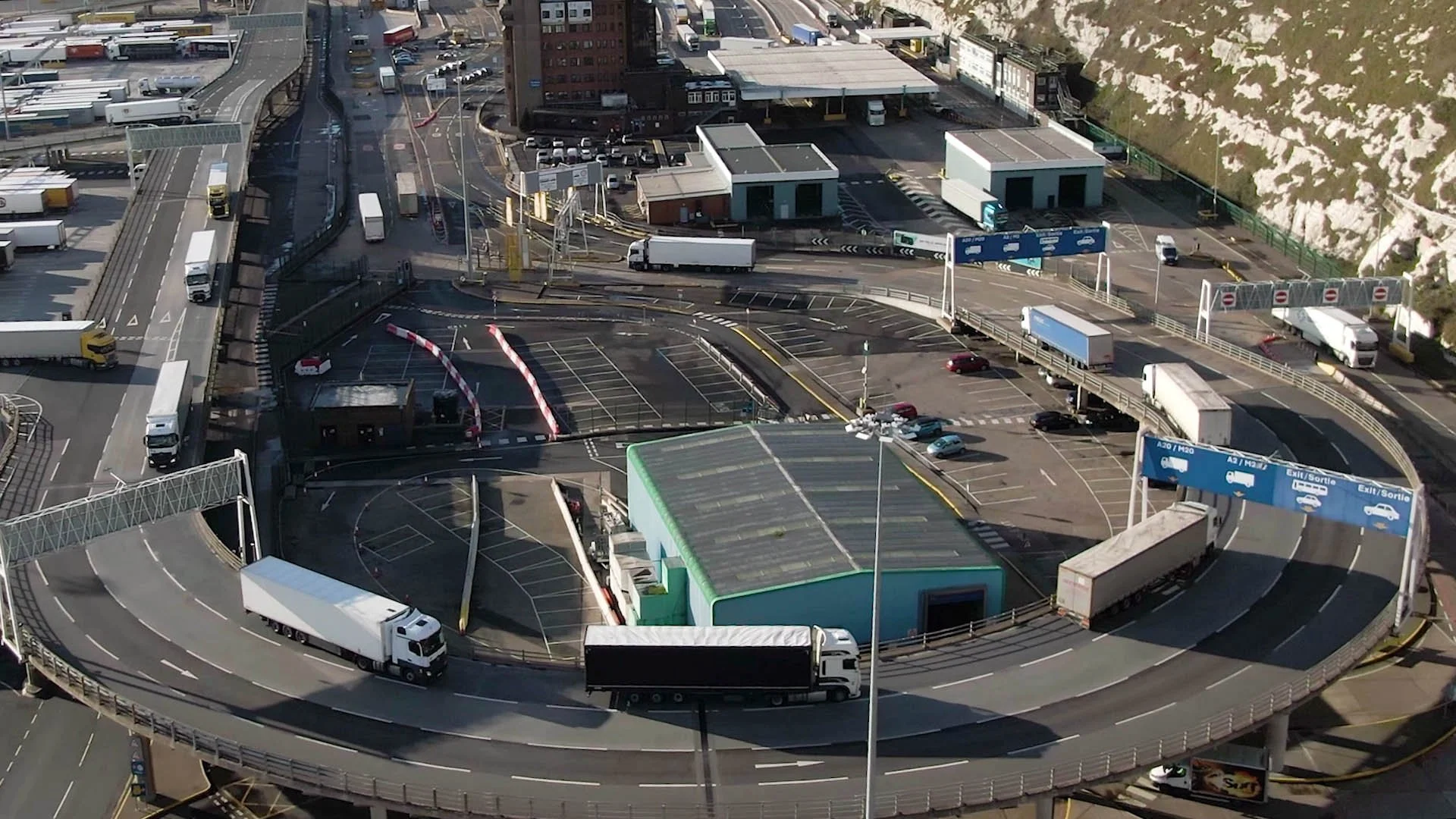
FPV and cinematic drone filming at the Port of Dover by Lewis Whyld, combining close-proximity flight with wider aerial views to show the scale, movement and interconnected transport infrastructure of a major working port.
Project Details
Client / Broadcaster: CNN
Location: Port of Dover, Kent
Role: FPV Pilot & Drone Cinematographer — Lewis Whyld
Filming: FPV and conventional aerial cinematography
Environment: Active international ferry port and transport hub
Coverage: Ferry terminals, port infrastructure, vehicle routes, maritime operations and wider harbour context
Technical Approach: Close-proximity FPV combined with wider aerial establishing shots
Challenges: Active vehicle movements, restricted operational areas, maritime infrastructure and maintaining safe separation around a working port
Story Focus: The scale, movement and logistics of one of the UK’s major transport gateways
Specialism: Ports / Logistics / Infrastructure / Transport / FPV / Aerial Cinematography
Filming Inside a Major Working Port
Filming at the Port of Dover meant working around a constantly changing transport environment, with ferries, freight traffic, passenger vehicles and port infrastructure all operating at the same time.
The drone work was designed to show how the port functions as a connected system rather than simply providing high aerial establishing shots. Moving through and around the infrastructure helped communicate the relationship between the harbour, ferry operations, road network and the continuous flow of vehicles through the site.
Operating in this environment required careful coordination around restricted areas and active transport movements, with flight routes planned around the operational demands of the port rather than interrupting them.
Drone Cinematography for Ports, Transport & Logistics
The Dover assignment combined the scale of conventional aerial cinematography with the need to work safely around a complex, highly regulated transport environment.
For ports and logistics sites, drone filming can connect individual operations into a much clearer visual story — showing how vehicles arrive, move through infrastructure, transfer between road and maritime systems, and ultimately leave the site.
That makes aerial cinematography particularly effective for broadcast, documentary and commercial productions covering transport, supply chains and major infrastructure, where understanding how the site works is just as important as showing its scale.
Related Case Studies
London Gateway — FPV and cinematic drone filming across a live container port and logistics environment.
Crossrail Tunnels — Specialist underground drone cinematography inside major transport infrastructure in GPS-denied conditions.
Plan B Cardiff Recycling Facility — Close-proximity FPV through an operational industrial site around heavy machinery and processing infrastructure.
Flying Scotsman — High-speed aerial tracking of one of Britain’s most recognisable heritage locomotives across the rail network.
Explore All FPV & Drone Case Studies →
Planning Drone Filming for Ports & Transport Infrastructure?
Through Whyldthings, I provide specialist drone cinematography for ports, logistics hubs, transport networks and other large-scale operational environments.
The Port of Dover project required aerial filming around active maritime and road infrastructure, using drone movement to show both the scale of the site and how its different transport systems connect.
For working ports and logistics facilities, the filming approach is built around operations first — planning safe routes, maintaining appropriate separation and choosing aircraft and camera systems suited to the environment without disrupting the site.
Discuss a Drone Project