Drone Filming Inside Bournemouth Airport’s Restricted Airspace
Specialist drone cinematography inside Bournemouth Airport’s Flight Restriction Zone, filmed during the Covid aviation shutdown when large numbers of passenger aircraft were grounded across the airfield. The assignment required direct coordination with airport operations and Air Traffic Control, with flight routes, launch and recovery points and operating windows planned around the procedures of an active airport environment. The aerial filming was designed to show the unusual scale of the grounded fleet while operating safely around aviation infrastructure and within tightly controlled airspace. The project demonstrates the planning, permissions and operational discipline required for drone cinematography at airports, aerospace facilities and other safety-critical commercial locations.
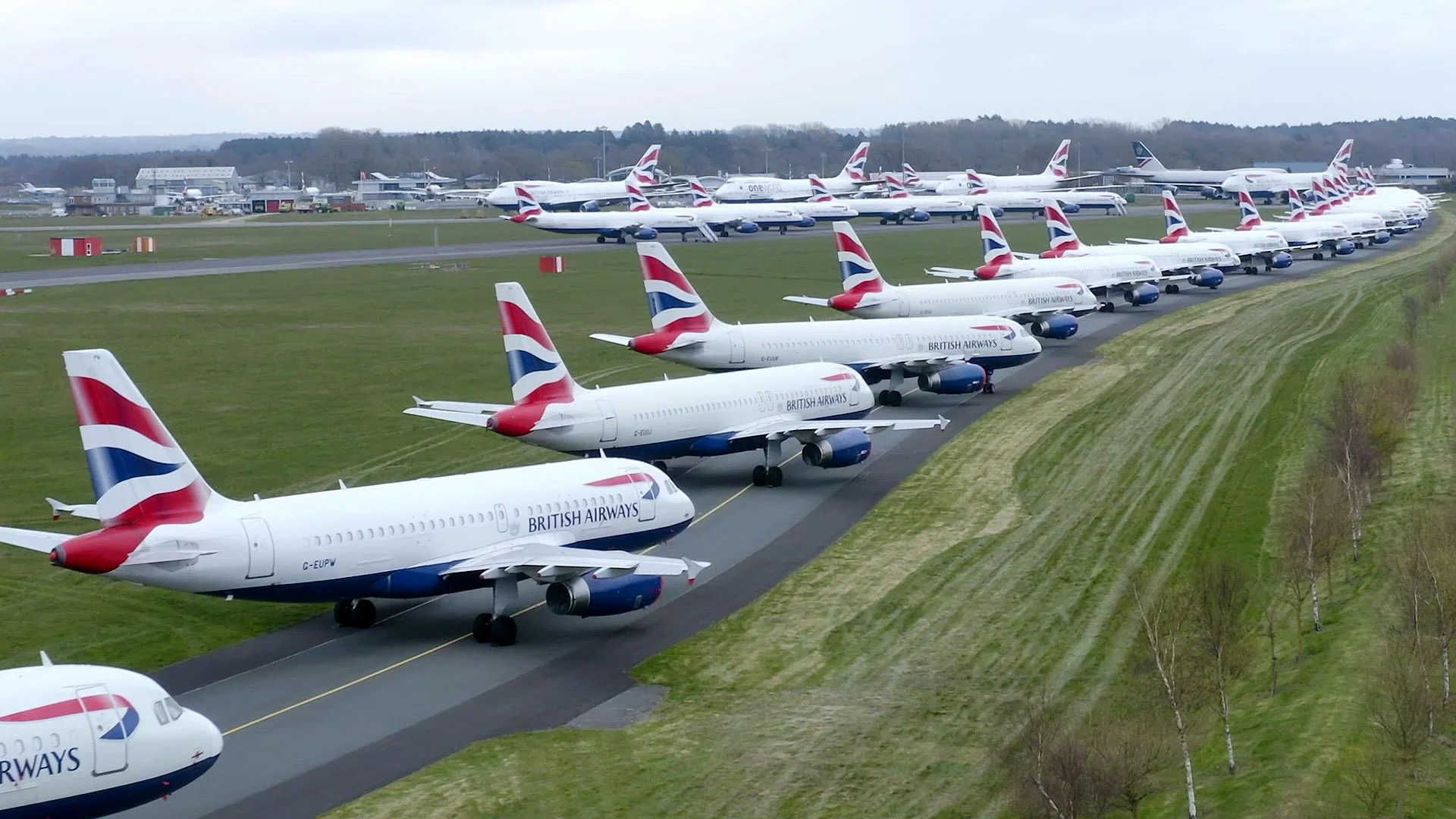
Aerial cinematography inside Bournemouth Airport’s restricted airspace, capturing rows of grounded passenger aircraft and aviation infrastructure while operating under direct coordination with airport operations and Air Traffic Control.
Project Details
Client / Broadcaster: CNN
Location: Bournemouth Airport, Dorset, UK
Role: Drone Pilot & Drone Cinematographer — Lewis Whyld
Filming: Cinematic aerial coverage inside the airport’s Flight Restriction Zone
Environment: Controlled airport airspace / grounded commercial aircraft / active aviation infrastructure
Operational Coordination: Direct liaison with airport operations and Air Traffic Control
Flight Planning: Pre-agreed routes, launch and recovery points and operating windows within controlled airspace
Coverage: Grounded passenger aircraft, taxiways, aprons, airport infrastructure and the wider scale of the stored fleet
Context: Filmed during the Covid aviation shutdown, when Bournemouth Airport was being used to accommodate large numbers of grounded commercial aircraft
Challenges: Restricted airspace, proximity to aviation infrastructure, maintaining separation from manned aircraft and working within airport operational procedures
Story Focus: The unprecedented grounding of commercial aviation and the visual scale of aircraft stored during the shutdown
Commercial Relevance: Airport, aviation, aerospace and other safety-critical environments requiring tightly controlled drone operations and formal site coordination
Specialism: Aviation / Restricted Airspace / Airports / Commercial Drone Filming / Safety-Critical Environments / Aerial Cinematography
Operating Inside Controlled Airport Airspace
Flying a drone at Bournemouth Airport required the operation to be treated as part of the airport environment rather than as a conventional location shoot. The aircraft was operating inside a Flight Restriction Zone, so every movement had to fit within the procedures governing the airfield.
Coordination with airport operations and Air Traffic Control established when and where the drone could fly, with launch points, recovery areas and routes agreed in advance. The operation also had to remain responsive to any change in manned aircraft activity or airport priorities.
That level of coordination allowed the drone to work close enough to the grounded fleet and airport infrastructure to create useful cinematic perspectives while maintaining the separation and operational discipline expected inside controlled aviation airspace.
Drone Cinematography for Aviation & Safety-Critical Environments
The Bournemouth Airport assignment demonstrates how commercial drone filming can be integrated into highly regulated environments where access and airspace control are central to the production.
For airports, aerospace facilities and other safety-critical sites, the filming approach has to be built around operational procedures first. Permissions, communication, separation from other activity and clearly defined flight areas are essential before creative considerations come into play.
Once those controls are in place, aerial cinematography can provide perspectives that conventional ground cameras cannot easily achieve — revealing the scale of aircraft, infrastructure and site operations while working within the procedures of the facility rather than disrupting them.
Related Case Studies
London Gateway — FPV and cinematic drone filming across a live deep-water container port and logistics environment with tightly controlled operational procedures.
Port of Dover — Specialist aerial filming across one of the UK’s busiest maritime and freight gateways, working around restricted access and active transport infrastructure.
Crossrail Tunnels — GPS-denied drone cinematography inside major underground transport infrastructure requiring precise manual control and detailed site coordination.
Chernobyl Reactor 4 — Specialist filming in a radiation-controlled nuclear environment where access, safety procedures and operational discipline were central to the shoot.
Explore All FPV & Drone Case Studies →
Planning Drone Filming at Airports & Aviation Facilities
Through Whyldthings, I provide specialist drone cinematography for airports, aerospace facilities, aviation infrastructure and other safety-critical environments where access and airspace require formal coordination.
The Bournemouth Airport assignment required direct liaison with airport operations and Air Traffic Control, with flight routes, operating windows, launch and recovery points planned around the procedures of an active airfield.
For aviation and other tightly regulated sites, the aircraft and filming plan are built around the operational environment first, allowing cinematic aerial coverage to be captured safely without compromising the systems, infrastructure or activity around it.
Discuss a Drone Project