FPV Cinematography for CNN’s Kobe: The Making of a Legend
FPV and specialist drone cinematography by Emmy-winning FPV pilot Lewis Whyld for the CNN Original Series Kobe: The Making of a Legend. Filmed across sporting venues and locations connected to Kobe Bryant’s story, the work used immersive FPV camera movement to bring audiences through the spaces rather than simply observe them from the sidelines. Lewis Whyld was nominated for a 2026 Sports Emmy for Outstanding Sports Journalism for the three-part series.
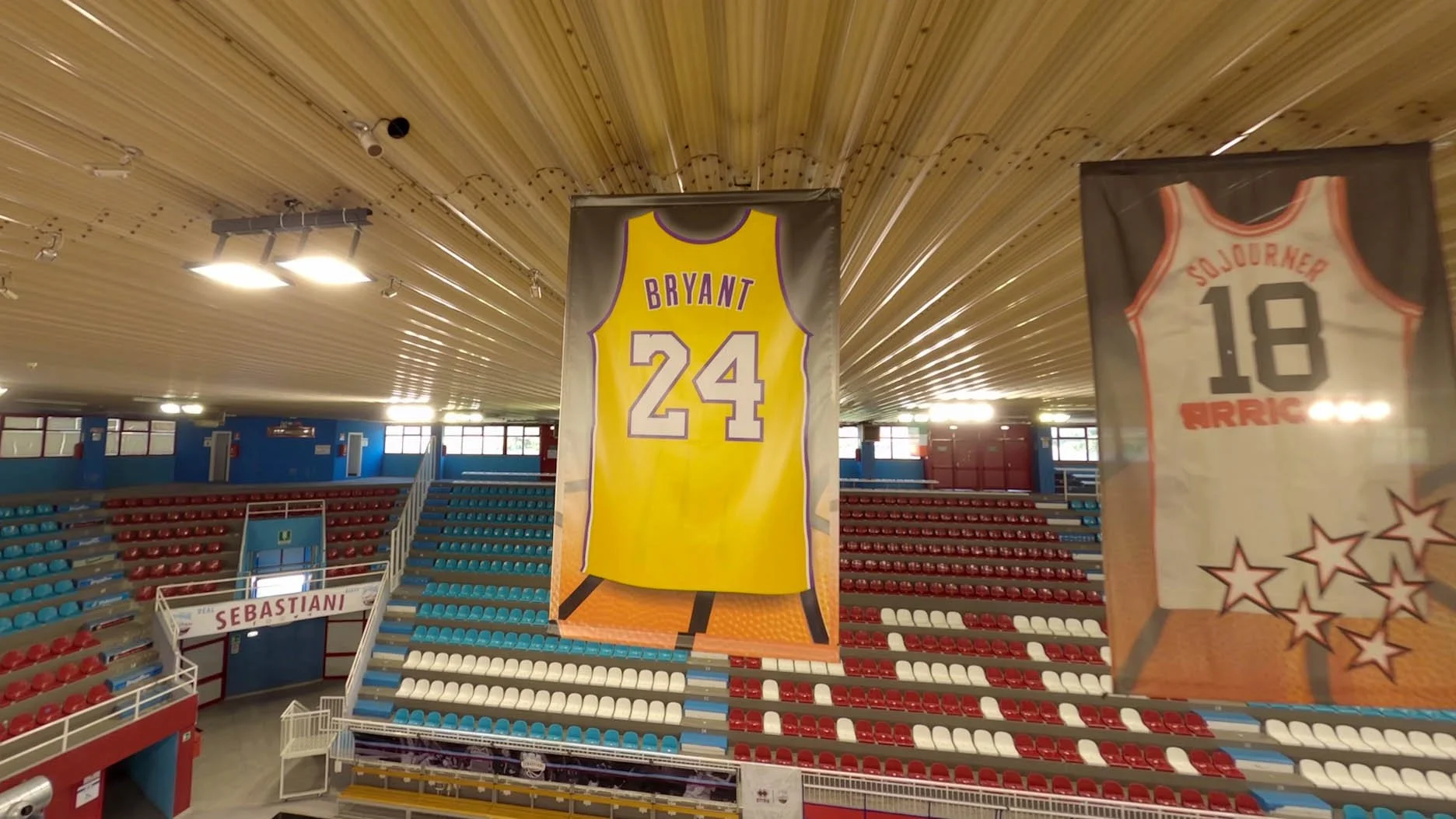
Immersive FPV filming by Lewis Whyld through sporting venues and locations featured in Kobe: The Making of a Legend, using continuous camera movement to connect the spaces, architecture and atmosphere of Kobe Bryant’s story.
Project Details
Client / Broadcaster: CNN
Production: Kobe: The Making of a Legend
Series: CNN Original Series
Subject: Kobe Bryant
Role: FPV Pilot & Drone Cinematographer — Lewis Whyld
Filming: FPV & specialist drone cinematography
Locations: Sporting venues and locations connected to Kobe Bryant’s story
Format: Three-part documentary series
Broadcast: CNN
Distribution: CNN, HBO Max, Hulu and Apple TV
Recognition: 2026 Sports Emmy nominee - Outstanding Sports Journalism
Awards: 2026 Sports Emmy nomination - Lewis Whyld
Credit: Photographer - Lewis Whyld
FPV Cinematography for Kobe: The Making of a Legend
My role on Kobe: The Making of a Legend was to create specialist FPV and drone imagery that could move through sporting venues and locations connected to Kobe Bryant’s story with a sense of energy, scale and momentum.
Rather than relying only on conventional establishing shots, FPV allowed the camera to travel through the architecture of the venues, move across courts and seating areas, and connect spaces in a more immersive way. The aim was to make the locations feel active and cinematic, even when they were being filmed outside the intensity of a live game.
Working on a high-profile CNN Original Series also meant balancing creative ambition with the practical demands of documentary production: access, permissions, safety, timing, repeatability and delivering shots that could cut seamlessly into a premium broadcast series.
Filming Through Kobe Bryant’s Sporting Venues
A key part of the project was using FPV to move through sporting venues connected to Kobe Bryant’s life and basketball story. One of those locations was PalaSojourner in Rieti, Italy, where Kobe’s father Joe Bryant played professional basketball after moving the family to Italy in the 1980s. Kobe’s No. 24 jersey now hangs in the arena’s rafters, making it a particularly significant location within the documentary.
The FPV sequences were designed to move through the venue rather than simply establish it from outside, travelling across the court, seating and architecture in continuous cinematic moves. This gave the production a more immersive way to connect the physical space with Kobe’s early relationship with basketball and the years he spent growing up in Italy.
Using FPV in sporting venues also allowed the camera to create scale and momentum even when the arena was empty - turning the court, stands and suspended jersey into part of the storytelling rather than simply background imagery.
Planning the FPV Flights
Every FPV sequence on Kobe: The Making of a Legend was filmed using Moonshot, my custom-built long-endurance FPV platform. I developed the aircraft to combine the agility and close-proximity control of a compact cinewhoop with significantly greater endurance, making it particularly well suited to long, complex camera moves through large sporting venues.
Using the same specialist platform throughout the FPV filming gave me the freedom to design longer continuous routes through courts, seating areas and venue architecture without being constrained by the short flight times typical of many small FPV systems. That extra endurance was especially valuable when the shot needed to build gradually through a space rather than simply capture a short pass or reveal.
Each venue still required its own flight plan, taking into account architecture, pilot position, signal reliability, safe clearances and production timing. The aim was to make technically demanding flights feel effortless on screen while delivering the controlled, repeatable and broadcast-quality imagery required for a major CNN Original Series.
Specialist FPV for Sport & Live Productions
Kobe: The Making of a Legend is part of a wider body of FPV work across sport, motorsport and live production, where speed, timing and camera movement are central to the storytelling.
I use FPV to create immersive sequences through arenas, courts and live venues, as well as close-proximity tracking alongside fast-moving subjects. That experience includes high-speed motorsport filming, live broadcast work and specialist indoor FPV through complex sporting environments.
For sports productions, FPV can do more than provide an aerial establishing shot. It can carry the viewer through the venue, follow the energy of the action and connect different parts of a location in one continuous cinematic move - creating a stronger sense of scale, speed and atmosphere.
Related Case Studies
Explore more FPV and drone cinematography across sport, live events and high-speed environments:
MPS Motorsport — Castle Combe — High-speed FPV tracking alongside British Superbike riders, including complete laps with circuit motorcycle lap-record holder Charlie Nesbitt.
Pure Padel Lightwater — A complete indoor FPV flythrough through six premium padel courts, clubhouse and social spaces, designed to show the flow and scale of the venue.
Craig David — CNN New Year’s Eve Live — Live FPV cinematography through Craig David’s performance at Twickenham Film Studios for Anderson Cooper and Andy Cohen’s global CNN broadcast.
King’s Lynn Circuit — Close-proximity FPV drift filming alongside cars at speed, flying low through tyre smoke and rapid changes of direction.
Moonshot: Bespoke Long-Endurance FPV Platform — The custom FPV aircraft used for all of the FPV filming on Kobe: The Making of a Legend, developed for longer continuous flights while retaining the agility required for close-proximity cinematography.
View All FPV & Drone Case Studies →
Planning FPV Filming for Sport or Live Production?
Through Whyldthings, I provide specialist FPV drone cinematography for sports documentaries, arenas, stadiums, live events, motorsport and branded sporting content.
From route planning and permissions through to bespoke aircraft selection, risk assessment and filming, I work with productions and venues to create dynamic camera movement safely and repeatably — whether the brief calls for an immersive flight through a sporting venue or high-speed tracking alongside the action.